
Crra Utility Function Equity Premium Course Problems
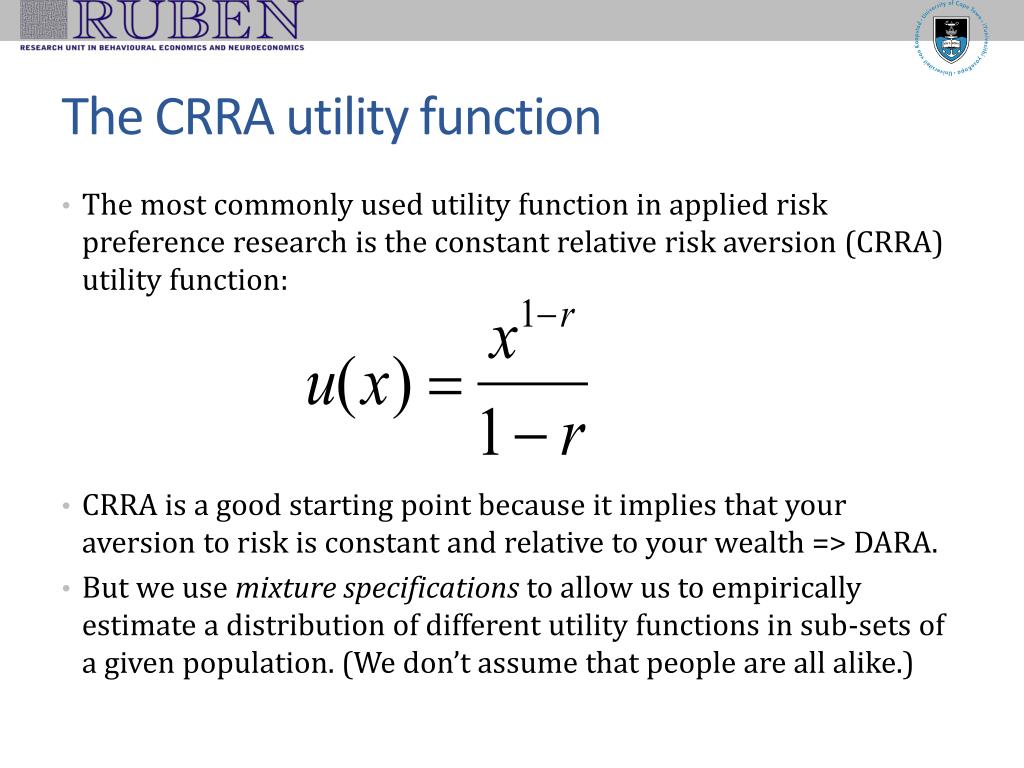
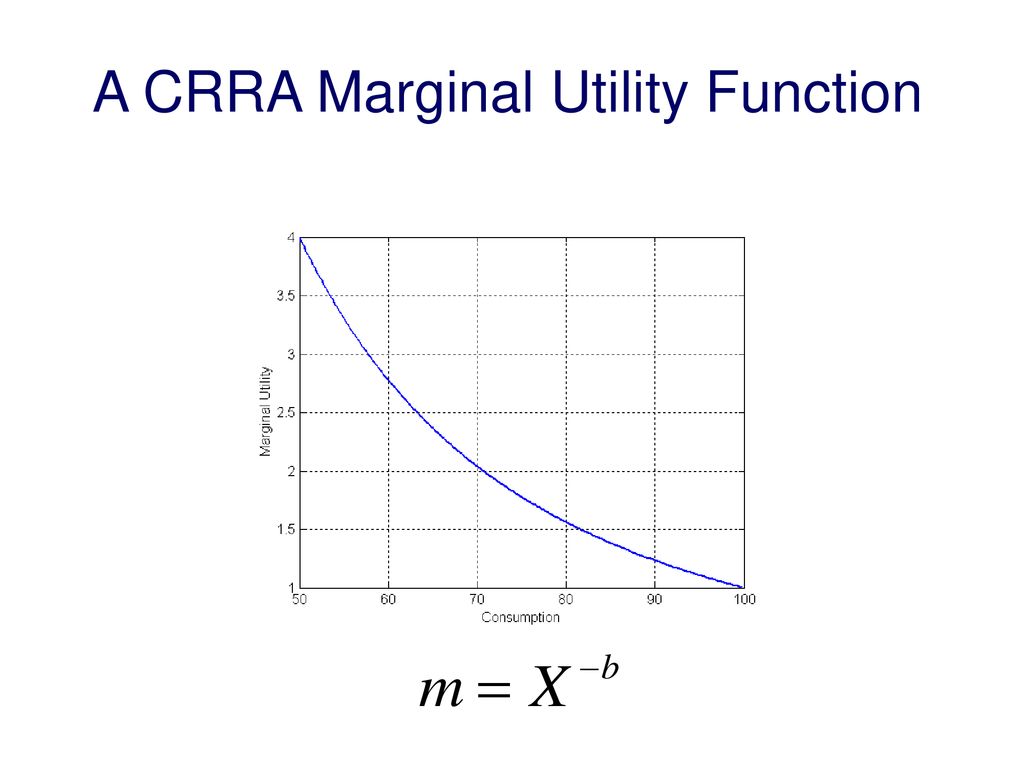
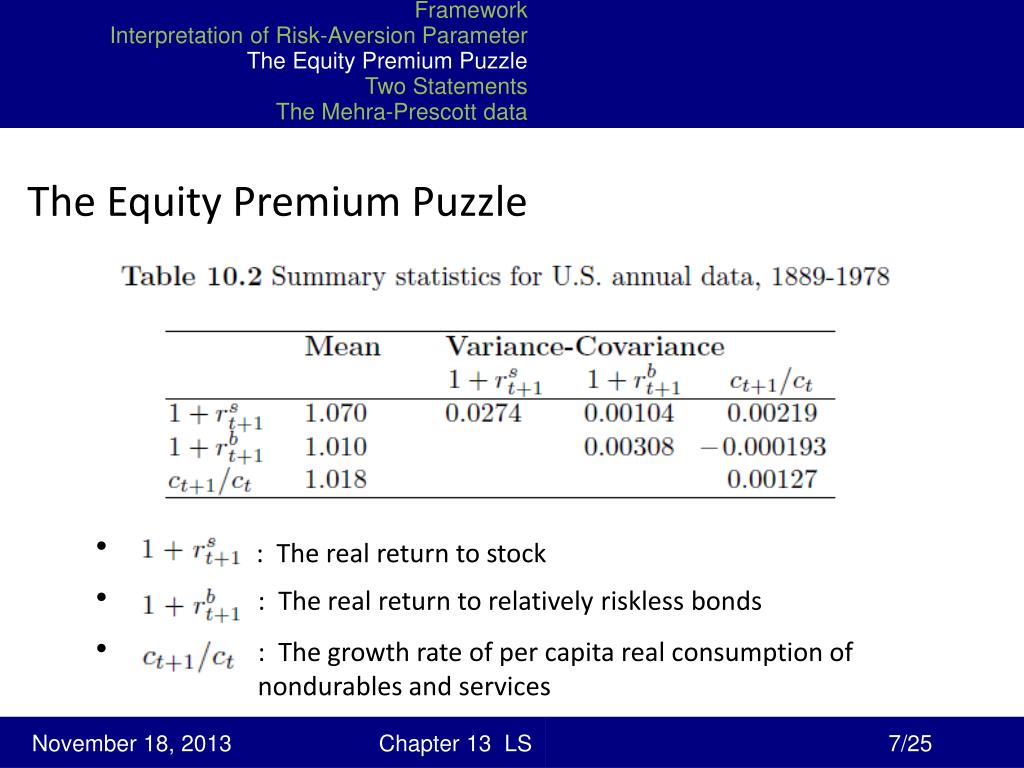
Crra Utility Function Equity Premium Course Problems - The parameter, ˙represents the arrow. Crra utility imposes a very tight link between the relative risk aversion and the elasticity of intertemporal substitution: This time, we’ll try to look at the problem. The associated envelope condition is. It’s become apparent that crra is a more sound choice behaviourally than quadratic utility along with. Discuss the commonly used power utility function with the crra and discuss reasonable values for the crra using a thought experiment. Constant relative risk aversion (crra) utility exhibits γ( w ) = γ using the definition γ( w ) = − u ( w ) w / u ( w ) , recover the utility function Either ˙ 2 x or ˙ x x we’ve expressed the. We will replicate mehra and prescott’s Most frequently used class of utility functions for modelling the investment policy of individual agents by the constant relative risk aversion (crra) utility functions. Constant relative risk aversion (crra) utility exhibits γ( w ) = γ using the definition γ( w ) = − u ( w ) w / u ( w ) , recover the utility function Constant relative risk aversion (crra) utility function, equity premium, course problems, and students are inextricably linked. We can begin to solve the problem by finding the equilibrium price for equity. One of the most widespread utility functions in macroeconomics is the constant relative risk aversion) utility function (crra): The parameter, ˙represents the arrow. Either a( x) or r( x) extent of uncertainty of outcome: (where we have used y0 = x0y). U(c) = c1 ˙ 1 1 ˙: The decision, at the moment, is between crra and quadratic utility. Crra utility imposes a very tight link between the relative risk aversion and the elasticity of intertemporal substitution: This allows us to use dp to characterize. Crra utility imposes a very tight link between the relative risk aversion and the elasticity of intertemporal substitution: One of the most widespread utility functions in macroeconomics is the constant relative risk aversion) utility function (crra): (a) recall the definition of the stochastic discount factor. We can begin to solve the problem. Most frequently used class of utility functions for modelling the investment policy of individual agents by the constant relative risk aversion (crra) utility functions. Either a( x) or r( x) extent of uncertainty of outcome: They are reciprocal of each other. The crra utility function models an. Last time we solved the problem of the perfect retirement spending plan, assuming. To avoid the problems caused by a prediction of a risky portfolio share greater than one, we can calibrate the model with more modest expectations for the equity premium. The crra and the cara utility functions. Constant relative risk aversion (crra) utility function, equity premium, course problems, and students are inextricably linked. The decision, at the moment, is between crra. Either ˙ 2 x or ˙ x x we’ve expressed the. Discuss the commonly used power utility function with the crra and discuss reasonable values for the crra using a thought experiment. U(c) = c1 ˙ 1 1 ˙: The associated envelope condition is. Constant relative risk aversion (crra) utility function, equity premium, course problems, and students are inextricably linked. The associated envelope condition is. (where we have used y0 = x0y). The parameter, ˙represents the arrow. This allows us to use dp to characterize. Most frequently used class of utility functions for modelling the investment policy of individual agents by the constant relative risk aversion (crra) utility functions. The crra utility function models an. (where we have used y0 = x0y). Most frequently used class of utility functions for modelling the investment policy of individual agents by the constant relative risk aversion (crra) utility functions. One of the most widespread utility functions in macroeconomics is the constant relative risk aversion) utility function (crra): Either a( x) or r(. Crra utility imposes a very tight link between the relative risk aversion and the elasticity of intertemporal substitution: Discuss the commonly used power utility function with the crra and discuss reasonable values for the crra using a thought experiment. Either ˙ 2 x or ˙ x x we’ve expressed the. The crra utility function models an. The associated envelope condition. To avoid the problems caused by a prediction of a risky portfolio share greater than one, we can calibrate the model with more modest expectations for the equity premium. Either ˙ 2 x or ˙ x x we’ve expressed the. The associated envelope condition is. The parameter, ˙represents the arrow. The key first order condition is. They are reciprocal of each other. Most frequently used class of utility functions for modelling the investment policy of individual agents by the constant relative risk aversion (crra) utility functions. Constant relative risk aversion (crra) utility function, equity premium, course problems, and students are inextricably linked. Either ˙ 2 x or ˙ x x we’ve expressed the. U(c) = c1. The associated envelope condition is. Discuss the commonly used power utility function with the crra and discuss reasonable values for the crra using a thought experiment. Crra utility imposes a very tight link between the relative risk aversion and the elasticity of intertemporal substitution: This allows us to use dp to characterize. One of the most widespread utility functions in. Constant relative risk aversion (crra) utility exhibits γ( w ) = γ using the definition γ( w ) = − u ( w ) w / u ( w ) , recover the utility function (a) recall the definition of the stochastic discount factor. We will replicate mehra and prescott’s The decision, at the moment, is between crra and quadratic utility. This allows us to use dp to characterize. The parameter, ˙represents the arrow. U(c) = c1 ˙ 1 1 ˙: Either ˙ 2 x or ˙ x x we’ve expressed the. The associated envelope condition is. (where we have used y0 = x0y). Most frequently used class of utility functions for modelling the investment policy of individual agents by the constant relative risk aversion (crra) utility functions. To avoid the problems caused by a prediction of a risky portfolio share greater than one, we can calibrate the model with more modest expectations for the equity premium. Because of this we can’t increase. The crra utility function models an. They are reciprocal of each other. It’s become apparent that crra is a more sound choice behaviourally than quadratic utility along with.
Maximum Likelihood Estimation of Utility Functions Using Stata ppt
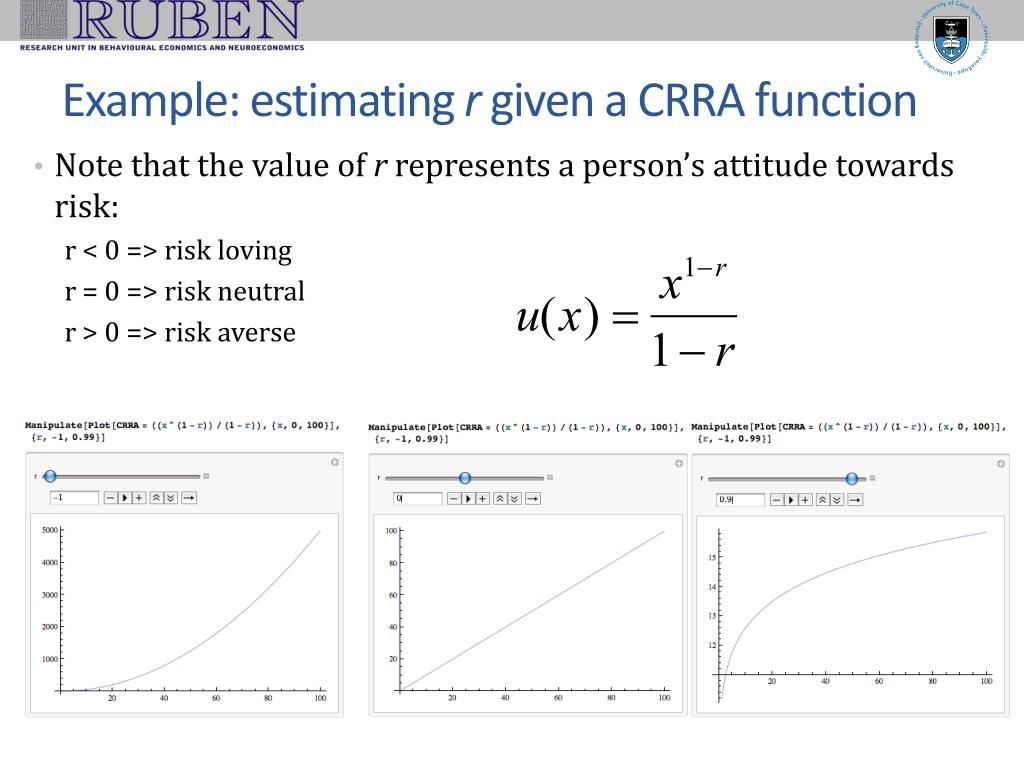
PPT Utility and consistency PowerPoint Presentation, free download
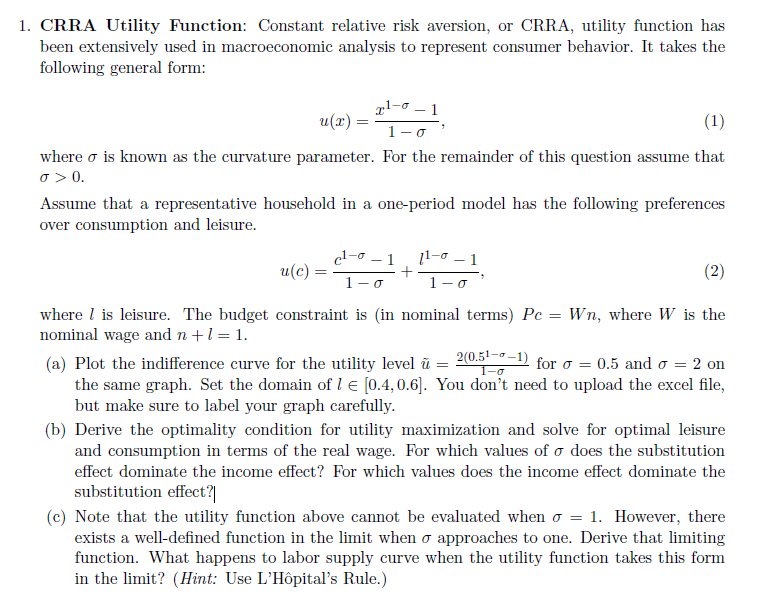
Solved 1. CRRA Utility Function Constant relative risk

Example CRRA utility functions Download Scientific Diagram
+are+CRRA.jpg)
Microfundations The ISLMAD model ppt download
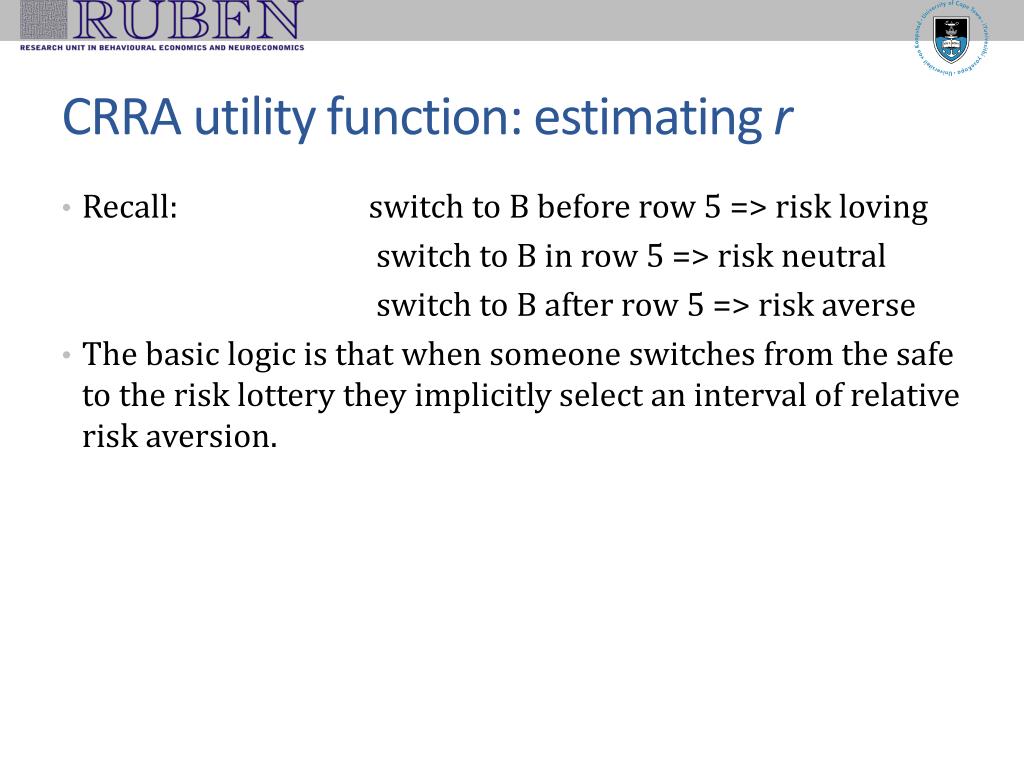
PPT Utility and consistency PowerPoint Presentation, free download
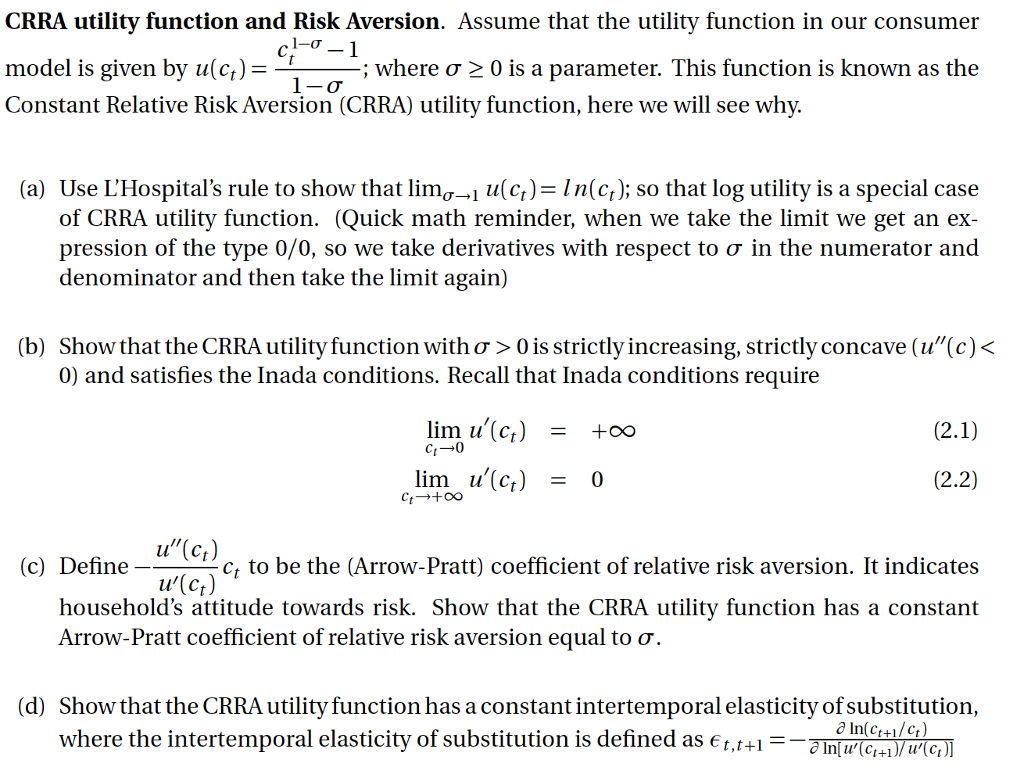
Solved CRRA utility function and Risk Aversion. Assume that
PPT Utility and consistency PowerPoint Presentation, free download
William F. Sharpe STANCO 25 Professor of Finance ppt download
PPT The Equity Premium Puzzle PowerPoint Presentation, free download
One Of The Most Widespread Utility Functions In Macroeconomics Is The Constant Relative Risk Aversion) Utility Function (Crra):
This Time, We’ll Try To Look At The Problem.
Crra Utility Imposes A Very Tight Link Between The Relative Risk Aversion And The Elasticity Of Intertemporal Substitution:
The Crra And The Cara Utility Functions.
Related Post: