
Social Problems Course
Social Problems Course - We will examine concerns facing social institutions such as the family, schools, media, and our healthcare system. This survey course studies major social problems in contemporary society, their nature, development, social causes, and possible solutions with an emphasis on the intersection of social identities including, but not limited to race, class, gender, and sexuality. • understand how social problems are socially constructed. Apply social change theories to historical/contemporary social problems and policies. Course focus is on uncovering the social conditions, forces, and social structures that give rise to social problems. This survey course studies major social problems in contemporary society, their nature, development, social causes, and possible solutions with an emphasis on the intersection of social identities including, but not limited to race, class, gender, and sexuality. Students will learn to think sociologically about the causes and consequences of contemporary social problems. Write and communicate orally in a clear, organized, and effective manner. Focuses on current social problems and issues facing american society. Course content is both theoretical and practical. Soc 268 is a course for students whose college and career paths require an awareness of the construction of social problems and how different groups are impacted by these problems. • understand how social problems are socially constructed. The course focuses on the role of power and ideology in the definition of social problems, identifying the causes of various social problems and consequences, and evaluating proposed solutions. Apply social change theories to historical/contemporary social problems and policies. Distinguish between individual and structural explanations of social problems. Students will learn to think sociologically about the causes and consequences of contemporary social problems. The sociological perspective provides the overarching framework for analyses of social issues, along with the application of sociological theory and research. Students investigate a series of important problems, including poverty, urban decline, family instability, crime and discrimination, by using a sociological perspective. In this course, students will learn to take a sociological perspective not only in examining the causes, consequences, and solutions to some of society ' s most troubling social problems, but also in taking a critical look at their own perceptions of the problem. You will learn to identify social problems, to analyze why they take place, and to strategize effective ways to resolve the issues you’ve identified. The course focuses on the role of power and ideology in the definition of social problems, identifying the causes of various social problems and consequences, and evaluating proposed solutions. This course examines a diverse sample of social problems facing the united states today and identifies how these problems affect, and are affected by, our institutions and culture. Assess the effects. Applies sociological analysis to understand how problems arise from the organization of society, and the processes by which conditions become identified as social problems, and how ideology and power shape responses to social problems. Students will learn to think sociologically about the causes and consequences of contemporary social problems. Describe the ways in which social problems are defined and constructed.. • explore how sociologists use theory (functionalist, conflict, symbolic interaction) to study social Use varied and effective research resources, techniques, and strategies. This course explores and analyzes contemporary american social problems and social issues using sociological tools. Applies sociological analysis to understand how problems arise from the organization of society, and the processes by which conditions become identified as social. Focuses on current social problems and issues facing american society. Identify the strengths and weaknesses of contending explanations or interpretations of major social problems. • understand how social problems are socially constructed. Students will learn to think sociologically about the causes and consequences of contemporary social problems. In this course, students will learn to take a sociological perspective not only. Critique proposed solutions to major social problems. The sociological perspective provides the overarching framework for analyses of social issues, along with the application of sociological theory and research. Applies sociological analysis to understand how problems arise from the organization of society, and the processes by which conditions become identified as social problems, and how ideology and power shape responses to. Describe the ways in which social problems are defined and constructed. Critique proposed solutions to major social problems. Identify the strengths and weaknesses of contending explanations or interpretations of major social problems. We will examine concerns facing social institutions such as the family, schools, media, and our healthcare system. Applies sociological analysis to understand how problems arise from the organization. Students investigate a series of important problems, including poverty, urban decline, family instability, crime and discrimination, by using a sociological perspective. This course explores and analyzes contemporary american social problems and social issues using sociological tools. Focuses on current social problems and issues facing american society. Assess the effects of social problems using empirical evidence. • explore how sociologists use. • understand how social problems are socially constructed. Emphasis will be placed on how social problems. Apply social change theories to historical/contemporary social problems and policies. In this course, students will learn to take a sociological perspective not only in examining the causes, consequences, and solutions to some of society ' s most troubling social problems, but also in taking. In this course, students will learn to take a sociological perspective not only in examining the causes, consequences, and solutions to some of society ' s most troubling social problems, but also in taking a critical look at their own perceptions of the problem. Identify the strengths and weaknesses of contending explanations or interpretations of major social problems. In this. Identify the strengths and weaknesses of contending explanations or interpretations of major social problems. Describe the cultural, social, and historical dynamics that influence how we construct social problems. This survey course studies major social problems in contemporary society, their nature, development, social causes, and possible solutions with an emphasis on the intersection of social identities including, but not limited to. Identify the strengths and weaknesses of contending explanations or interpretations of major social problems. Use varied and effective research resources, techniques, and strategies. Critique proposed solutions to major social problems. Students investigate a series of important problems, including poverty, urban decline, family instability, crime and discrimination, by using a sociological perspective. • understand how social problems are socially constructed. Focuses on current social problems and issues facing american society. Apply the sociological perspective to identify and analyze social problems. • explore how sociologists use theory (functionalist, conflict, symbolic interaction) to study social We will examine concerns facing social institutions such as the family, schools, media, and our healthcare system. Students will learn to think sociologically about the causes and consequences of contemporary social problems. Course content is both theoretical and practical. You will learn to identify social problems, to analyze why they take place, and to strategize effective ways to resolve the issues you’ve identified. Write and communicate orally in a clear, organized, and effective manner. Assess the effects of social problems using empirical evidence. In this course, students will learn to take a sociological perspective not only in examining the causes, consequences, and solutions to some of society ' s most troubling social problems, but also in taking a critical look at their own perceptions of the problem. The course focuses on the role of power and ideology in the definition of social problems, identifying the causes of various social problems and consequences, and evaluating proposed solutions.
Buy Understanding Social Problems Book Online at Low Prices in India
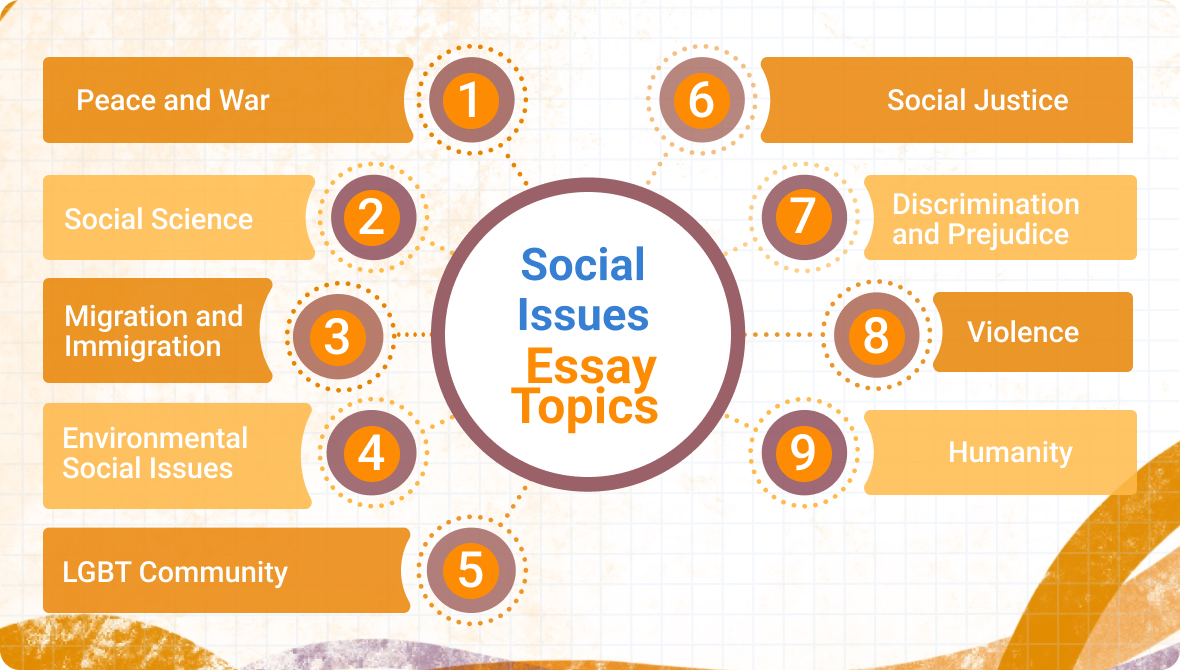
Social Issues Topics Discover a Comprehensive List of Societal Challe

SOCI 250 P1 Social Problems SOCI 250 Social Problems Course Outline

Summary of Social Issues and Professional Practice

Social Problems Chapter 1 lecture terms and notes Color key
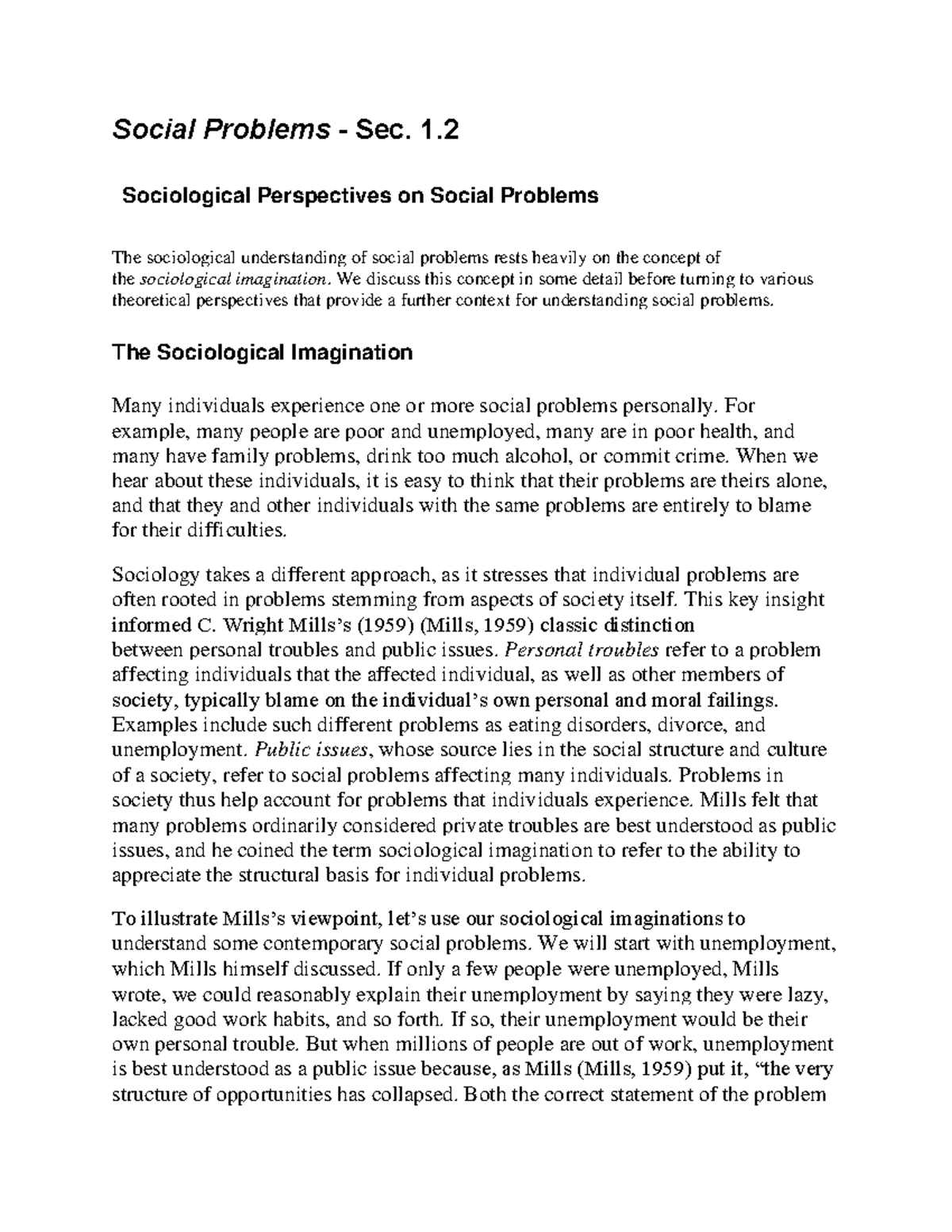
Sec 1.2 Sociological Perspectives on Social Problems Social Problems
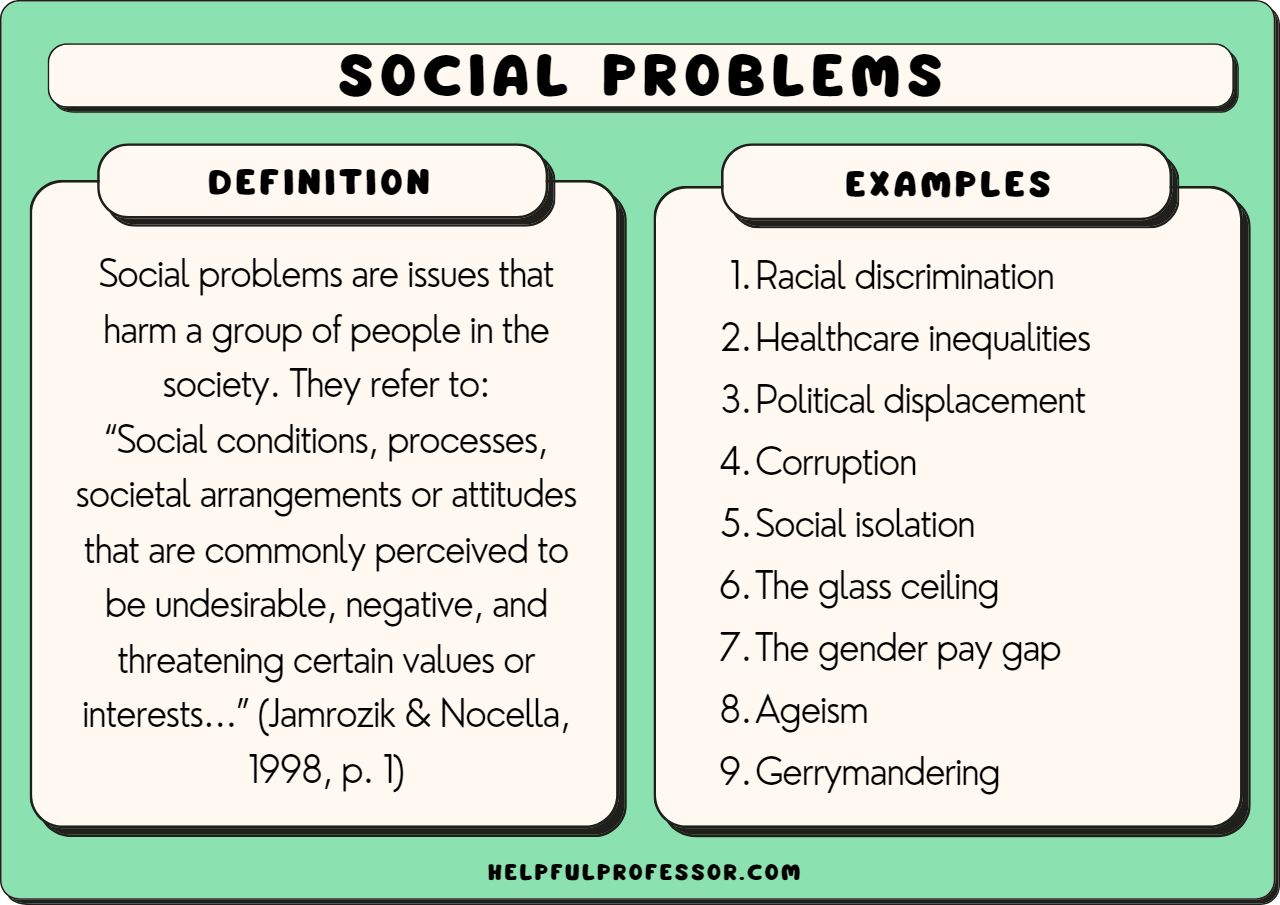
25 Major Social Problems (Examples) (2025)
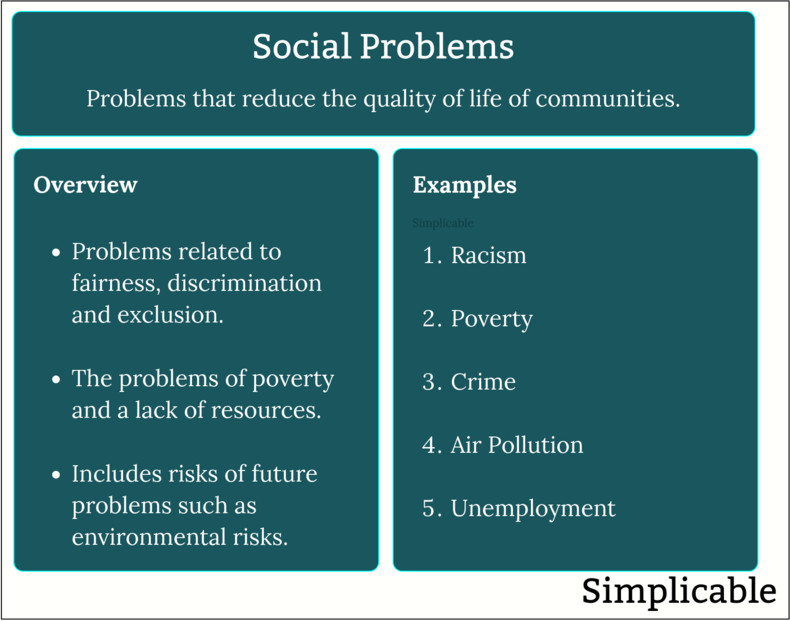
94 Examples Of Social Issues Simplicable, 41 OFF
Social Problems I A World in Crisis eDynamic Learning

Social Problems Course Study Guide Exam 2 Chapter 7 Why might the
Applies Sociological Analysis To Understand How Problems Arise From The Organization Of Society, And The Processes By Which Conditions Become Identified As Social Problems, And How Ideology And Power Shape Responses To Social Problems.
This Survey Course Studies Major Social Problems In Contemporary Society, Their Nature, Development, Social Causes, And Possible Solutions With An Emphasis On The Intersection Of Social Identities Including, But Not Limited To Race, Class, Gender, And Sexuality.
Soc 268 Is A Course For Students Whose College And Career Paths Require An Awareness Of The Construction Of Social Problems And How Different Groups Are Impacted By These Problems.
The Sociological Perspective Provides The Overarching Framework For Analyses Of Social Issues, Along With The Application Of Sociological Theory And Research.
Related Post: